 he country legislator, who makes the laws which govern cities, no doubt supposes the day ends
with "milking time" and to him the hour of midnight is the meridian which divides the good from
the bad, by fixing the time when the former are in bed and the latter are abroad. Even people
born and raised in cities imagine that life ceases at least with the return from the opera, and
the "last car" is to them the signal which warns them that dissipation is wooing them from their
sleep. To most people staying-up-all-night is intimately associated with the Americanism, "red
paint", which expresses a deal of meaning to those familiar with this quaint Dakota idiom. Those
who turn night into day in Minneapolis to earn a living number several thousand, but it is the
people who take their playtime or recreation in the evening who impart the animation to the
streets and give vivacity to the scenes by gaslight.
he country legislator, who makes the laws which govern cities, no doubt supposes the day ends
with "milking time" and to him the hour of midnight is the meridian which divides the good from
the bad, by fixing the time when the former are in bed and the latter are abroad. Even people
born and raised in cities imagine that life ceases at least with the return from the opera, and
the "last car" is to them the signal which warns them that dissipation is wooing them from their
sleep. To most people staying-up-all-night is intimately associated with the Americanism, "red
paint", which expresses a deal of meaning to those familiar with this quaint Dakota idiom. Those
who turn night into day in Minneapolis to earn a living number several thousand, but it is the
people who take their playtime or recreation in the evening who impart the animation to the
streets and give vivacity to the scenes by gaslight.
 The life of a "street" reporter on a
morning daily in a great city includes a symposium of events which might be taken as a true
record of the happenings, which, with occasional deviations, make up the history of Minneapolis
after dark. Take a large town, just putting on metropolitan airs, in which there is an almost
entire absence of the criminal class, spawned and bred into an existence which comes almost like
a heritage, restrict its immoral propensities to a degree that is almost irksome and you have
Minneapolis.
There are no organized gangs of toughs, "no holes in the wall," no dance houses,
few dives. A night spent "doing the town" could furnish but little amusement for the blase
rounder who has run the gauntlet of vice in larger cities. But to return to the night - its
history devoid of sensationalism presents a routine chat grows quickly wearisome.
The life of a "street" reporter on a
morning daily in a great city includes a symposium of events which might be taken as a true
record of the happenings, which, with occasional deviations, make up the history of Minneapolis
after dark. Take a large town, just putting on metropolitan airs, in which there is an almost
entire absence of the criminal class, spawned and bred into an existence which comes almost like
a heritage, restrict its immoral propensities to a degree that is almost irksome and you have
Minneapolis.
There are no organized gangs of toughs, "no holes in the wall," no dance houses,
few dives. A night spent "doing the town" could furnish but little amusement for the blase
rounder who has run the gauntlet of vice in larger cities. But to return to the night - its
history devoid of sensationalism presents a routine chat grows quickly wearisome.
8 p. m. The streets are alive with people. The small dealers and hucksters garner their harvest
of trade. The places of amusement and recreation are filled with their patrons. The high-toned
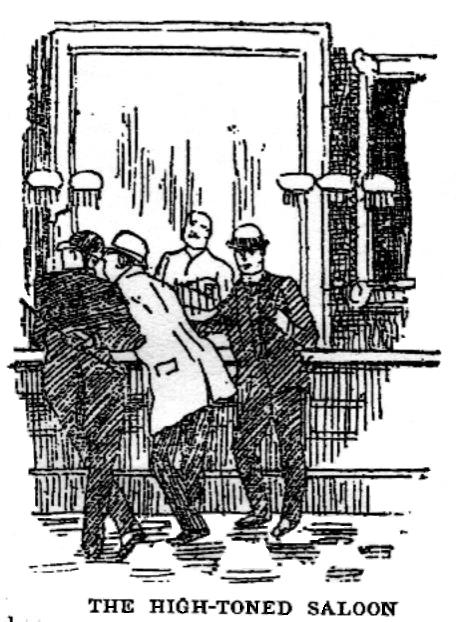 saloon has its run of fashionable tipplers, men about town and youthful bacchanalians, where the
pleasant clinking of glasses, the rich coloring of attractive surroundings and genial
companionship, make a scene of careless pleasure far from disagreeable. The resorts of the middle
lower each have their cotorie of loungers, and grade themselves instinctively in accordance with
the character of their visitors.
saloon has its run of fashionable tipplers, men about town and youthful bacchanalians, where the
pleasant clinking of glasses, the rich coloring of attractive surroundings and genial
companionship, make a scene of careless pleasure far from disagreeable. The resorts of the middle
lower each have their cotorie of loungers, and grade themselves instinctively in accordance with
the character of their visitors.
Midnight. The lights have died away in the store fronts. The tinkle of the street-car bell comes
less frequently, or has ceased [altogether]. The promenaders have vanished and in their stead
 occasional pedestrians dot the pavements. The saloons disgorge, for the order "close up" comes
promptly. Snatches of song and laughter die away around the corners. Shadows creep into the
alley-ways and entrances. The slamming of a hack door or "good night" is the benediction of the
occasional pedestrians dot the pavements. The saloons disgorge, for the order "close up" comes
promptly. Snatches of song and laughter die away around the corners. Shadows creep into the
alley-ways and entrances. The slamming of a hack door or "good night" is the benediction of the
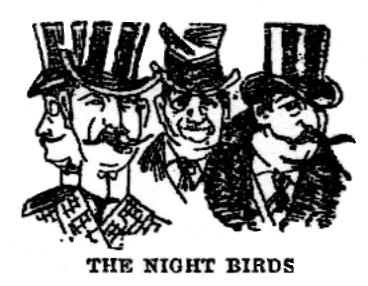
 evening. Then come the night birds, the loiterers, and those who seek forgetfulness in
dissipation, or who court the forbidden pleasures which must be sought behind curtained windows
and locked doors. "The Rounder" is abroad, and his bluster can be heard upon the curb and at
corners.
evening. Then come the night birds, the loiterers, and those who seek forgetfulness in
dissipation, or who court the forbidden pleasures which must be sought behind curtained windows
and locked doors. "The Rounder" is abroad, and his bluster can be heard upon the curb and at
corners.
2 a. m. Even these seem to melt away, and the darkness and the streets are quiet -- where do
they go?
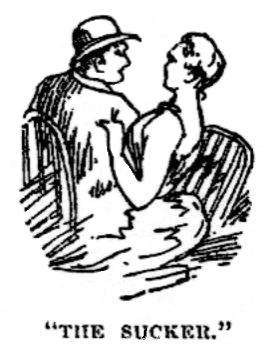 To the resorts where the farcial laughter of women is heard, where painted faces and
tinseled finery bequile the quickly passing hours. Here "The Sucker" learns his lesson, and the
debauchee has his amusement. Enter that house with its darkened front. A ring at the door brings
the face of a sable attendant to view. There is the rattle of a chain, and you are admitted.
To the resorts where the farcial laughter of women is heard, where painted faces and
tinseled finery bequile the quickly passing hours. Here "The Sucker" learns his lesson, and the
debauchee has his amusement. Enter that house with its darkened front. A ring at the door brings
the face of a sable attendant to view. There is the rattle of a chain, and you are admitted.
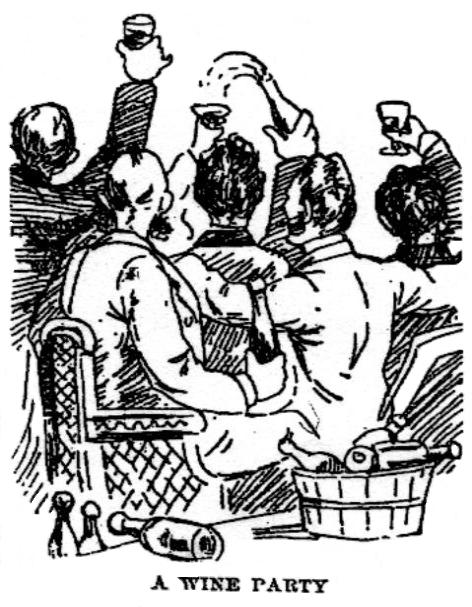 It is a wine party and mad mirth holds sway. Visit the
private club room. Climb up the stairways, go through dark hallways. Your guide raps, and a small
aperture opens, through which some one silently scrutinizes you. "All right," and another door
is opened. Into another room you pass, and here you find gay company and good fellowship. True,
the law of the state reads that no places must be kept open for the sale of liquor after
midnight, and the police commission says the law is enforced, but you have only to ask for what
you want, come down stairs again, walk a block or two and climb another stairway. Again an eye
from within views you through the circular aperture, and you are admitted. You hear the rattle of
chips and the monosyllabic talk of gamesters.
It is a wine party and mad mirth holds sway. Visit the
private club room. Climb up the stairways, go through dark hallways. Your guide raps, and a small
aperture opens, through which some one silently scrutinizes you. "All right," and another door
is opened. Into another room you pass, and here you find gay company and good fellowship. True,
the law of the state reads that no places must be kept open for the sale of liquor after
midnight, and the police commission says the law is enforced, but you have only to ask for what
you want, come down stairs again, walk a block or two and climb another stairway. Again an eye
from within views you through the circular aperture, and you are admitted. You hear the rattle of
chips and the monosyllabic talk of gamesters.
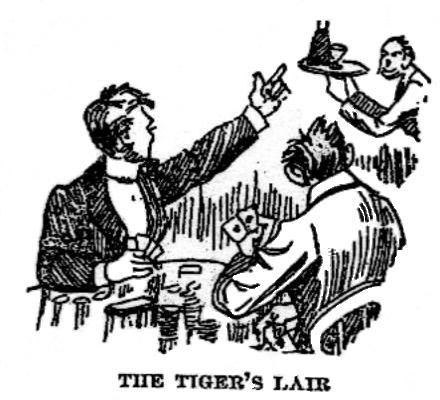 The faro lay-out, with its group of silent players,
or the whirl of the roulette wheel attracts you, or perhaps you go further into the adjoining
room where "private" card games are in progress, the tiger's lair is surely not hidden from
those who seek. Down on the streets again. All is quiet; a passing patrolman may be the sole
sentry of the thoroughfare. The night restaurant throws out its banner of light. Within is the
cheerful clatter of dishes, while the smell of coffee comes with refreshing fragance.
The faro lay-out, with its group of silent players,
or the whirl of the roulette wheel attracts you, or perhaps you go further into the adjoining
room where "private" card games are in progress, the tiger's lair is surely not hidden from
those who seek. Down on the streets again. All is quiet; a passing patrolman may be the sole
sentry of the thoroughfare. The night restaurant throws out its banner of light. Within is the
cheerful clatter of dishes, while the smell of coffee comes with refreshing fragance.
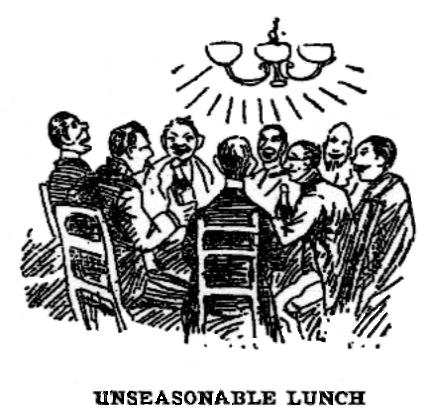 Long rows of high stools before high counters give an invitation for an unseasonable
lunch which can not be resisted.
Long rows of high stools before high counters give an invitation for an unseasonable
lunch which can not be resisted.
4 a. m. The gray light of early morning shoots over the tops of the business blocks and dulls
the glimmer of the gaslights to a sickening yellow. The sidewalks and the pavements seem dirty
and begrimmed, and there is a smell
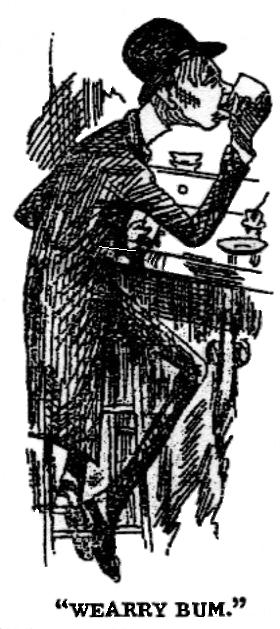 of decay which you have not noticed before. Perhaps some
weary "bum" or sleeping vagrant greets your eye as you look up and down the avenue which seems
unnatural because you have never seen it before without its crowds of rushing, pushing humanity,
or without its roar and bustle. Now it seems cold and quiet, and the very telegraph poles appear
to stand as monuments in some great, silent cemetery. As you walk along signs of returning life
appear. The newspaper carrier, half asleep, stumbles along. Then comes the rattle of a milk
wagon, a block away, but what a noise it makes. White turbaned bakers stand in the area across
the way to catch a breath of the morning breeze.
of decay which you have not noticed before. Perhaps some
weary "bum" or sleeping vagrant greets your eye as you look up and down the avenue which seems
unnatural because you have never seen it before without its crowds of rushing, pushing humanity,
or without its roar and bustle. Now it seems cold and quiet, and the very telegraph poles appear
to stand as monuments in some great, silent cemetery. As you walk along signs of returning life
appear. The newspaper carrier, half asleep, stumbles along. Then comes the rattle of a milk
wagon, a block away, but what a noise it makes. White turbaned bakers stand in the area across
the way to catch a breath of the morning breeze.

5 a. m. The noise of lumbering wagons has increased, pedestrians multiply and hurry along briskly. Omnibuses and cabs go jolting along on their way to deports. Store doors come open and sweepers appear. The motor steams down its narrow track and discharges its load of passengers. The street cars roll along, the sun breaks out in a glory of light and the day is born again.