KinSource
Minnesota Tales
The St. Paul Globe, December 20, 1891, p. 17
HACKMEN IN BONDS.
The Organization to Give the Cabbies More Work and Play.
Men Who Have Literally Not a Minute for Their Homes.
Scheduling the Men to the Districts to Divide Up Business.
The Hack Drivers' Union and What It Intends to Accomplish.
 The hack and cab drivers who depend upon transient or casual business picked up along the curb have at
last solved the problem of making their burdens lighter. The solution of the problem is destined not only
to benefit the aforesaid drivers but the general public as well. It is a common sight in any large city
to see rows of cabs and carriages standing along the curb in the [localities] where throngs of people
pass along. The horses attached to such vehicles are often jaded and ill-favored, indicating hard service,
lack of care and want of feed to make them sleek. The drivers themselves frequently have the appearance
of prematurely old men from whose frames much of the vigor and steel have been extracted by exposure to
snow storms, alternating with the rains and biting air of many degrees below zero. It may be a new statement
to many to say that hundreds of street wagons or hacks not only put in the whole night at plying their
business or waiting an opportunity to turn an honest penny, but they are often on duty eighteen or more
hours out of the twenty-four, and this, too, without shelter for themselves or teams in the severest of
weather. To reduce these hardships to a minimum and still provide a living for themselves and families,
as well as to give better care to their horses, has been a question that has been discussed among the
owners of the hacks who depend on curb orders for business. Among their number are a score or more of
men who have spent years in St. Paul, braving the heat and cold in hauling the casual citizen or visitor
from some down-town point to his home or hotel. It was conceded that if all the drivers in the city
would agree to stand together the hours of service might be much shortened without a loss of money, and
at the same time the public might be induced to divert more of their patronage from the regular livery
The hack and cab drivers who depend upon transient or casual business picked up along the curb have at
last solved the problem of making their burdens lighter. The solution of the problem is destined not only
to benefit the aforesaid drivers but the general public as well. It is a common sight in any large city
to see rows of cabs and carriages standing along the curb in the [localities] where throngs of people
pass along. The horses attached to such vehicles are often jaded and ill-favored, indicating hard service,
lack of care and want of feed to make them sleek. The drivers themselves frequently have the appearance
of prematurely old men from whose frames much of the vigor and steel have been extracted by exposure to
snow storms, alternating with the rains and biting air of many degrees below zero. It may be a new statement
to many to say that hundreds of street wagons or hacks not only put in the whole night at plying their
business or waiting an opportunity to turn an honest penny, but they are often on duty eighteen or more
hours out of the twenty-four, and this, too, without shelter for themselves or teams in the severest of
weather. To reduce these hardships to a minimum and still provide a living for themselves and families,
as well as to give better care to their horses, has been a question that has been discussed among the
owners of the hacks who depend on curb orders for business. Among their number are a score or more of
men who have spent years in St. Paul, braving the heat and cold in hauling the casual citizen or visitor
from some down-town point to his home or hotel. It was conceded that if all the drivers in the city
would agree to stand together the hours of service might be much shortened without a loss of money, and
at the same time the public might be induced to divert more of their patronage from the regular livery
 stables and give it to the curb-stone teams. After considerable discussion among the drivers the trades
and labor assembly was applied to for assistance and as a result the hack and cab drivers' union was
organized a few weeks ago with a membership of sixty drivers. A constitution and by-laws were adopted
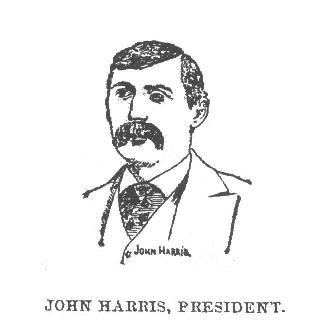
and officers were elected, of whom John Harris, one of the oldest and most respected hackmen in the city,
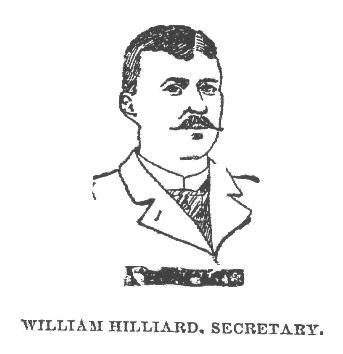
was chosen president. William Hilliard, the secretary, is a young man who has the esteem of his fellows.
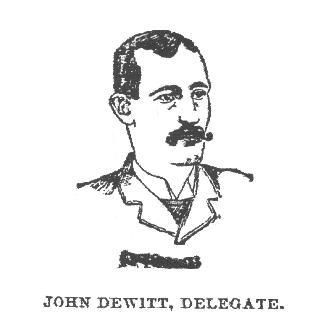
The delegate to the trades and labor assembly is John DeWitt, one of the men who gave especial attention
to the details of organizing his fellow cabmen.
stables and give it to the curb-stone teams. After considerable discussion among the drivers the trades
and labor assembly was applied to for assistance and as a result the hack and cab drivers' union was
organized a few weeks ago with a membership of sixty drivers. A constitution and by-laws were adopted
and officers were elected, of whom John Harris, one of the oldest and most respected hackmen in the city,
was chosen president. William Hilliard, the secretary, is a young man who has the esteem of his fellows.
The delegate to the trades and labor assembly is John DeWitt, one of the men who gave especial attention
to the details of organizing his fellow cabmen.
It is the unanimous sentiment of the members that the hours of duty watching for business may be readily
shortened by agreement of all concerned. The plans proposed to effect this are as follows: There being
certain places established by custom where hacks and cabs congregate in groups, it is only necessary that
a portion of them be there at a time. Therefore, it may readily be arranged so that the drivers will be
divided into reliefs of so many hours each. While some are at those customary stands ready to accomodate
the public, others can house their team and give their own time to recreation or rest with their families.
The organizations into reliefs is to be so effected that the work will be evenly distributed and the
compensation equitably adjusted.
A central office will be established soon, probably in the A. D. T. office. The union will put a manager
in this office who will take orders and will distribute the business equally among the various members
 of the union. For this position a man of large acquaintance and experience in the business will be required.
He must of necessity learn the character of conveyance desired by the person ordering the conveyance,
and then to be able to call the style and kind desired. The expense of maintaining this office will be
borne by the drivers on the equitable basis of the orders given to each. The manager will keep a roster
and divide the business equally as near as practicable. All of the union drivers are provided with a
silver badge worn on the lapel of the coat. It is the intention that the public shall have the confidence
of the union and to understand that any imposition upon patrons will be considered by the union. In case
of an overcharge or abuse by a driver the union will make an investigation and do what it can to protect
the public from a repetition of the offense and to adjust the wrong done if practical. It is believed that
the union will be able to furnish hacks for funerals and to do much other work that has heretofore been
monopolized by livery barns. In other words, the union is a co-operative livery stable on an extensive
scale, and it is apparent that the general appearance and service of the teams and drivers will be much
improved by the system [adopted], and that the union will work beneficially not only to the members
themselves but to the general public as well.
of the union. For this position a man of large acquaintance and experience in the business will be required.
He must of necessity learn the character of conveyance desired by the person ordering the conveyance,
and then to be able to call the style and kind desired. The expense of maintaining this office will be
borne by the drivers on the equitable basis of the orders given to each. The manager will keep a roster
and divide the business equally as near as practicable. All of the union drivers are provided with a
silver badge worn on the lapel of the coat. It is the intention that the public shall have the confidence
of the union and to understand that any imposition upon patrons will be considered by the union. In case
of an overcharge or abuse by a driver the union will make an investigation and do what it can to protect
the public from a repetition of the offense and to adjust the wrong done if practical. It is believed that
the union will be able to furnish hacks for funerals and to do much other work that has heretofore been
monopolized by livery barns. In other words, the union is a co-operative livery stable on an extensive
scale, and it is apparent that the general appearance and service of the teams and drivers will be much
improved by the system [adopted], and that the union will work beneficially not only to the members
themselves but to the general public as well.
Copyright 2005 KinSource All Rights Reserved